One Surface, Every Speed Regime
Project Helga's airframe is a blended wing lifting body with a hypersonic double-delta planform — a single continuous structure that carries the vehicle from runway takeoff, through hypersonic orbital insertion, to a controlled runway landing without a wing, fuselage, or control surface ever being optimised for just one part of that envelope.
The Structure Behind the Skin
The perspective, plan, port, and front views are covered on the Aerospace overview page. The planform and three-quarter views below show the double-delta wing sweep and blended wing-body integration in full.
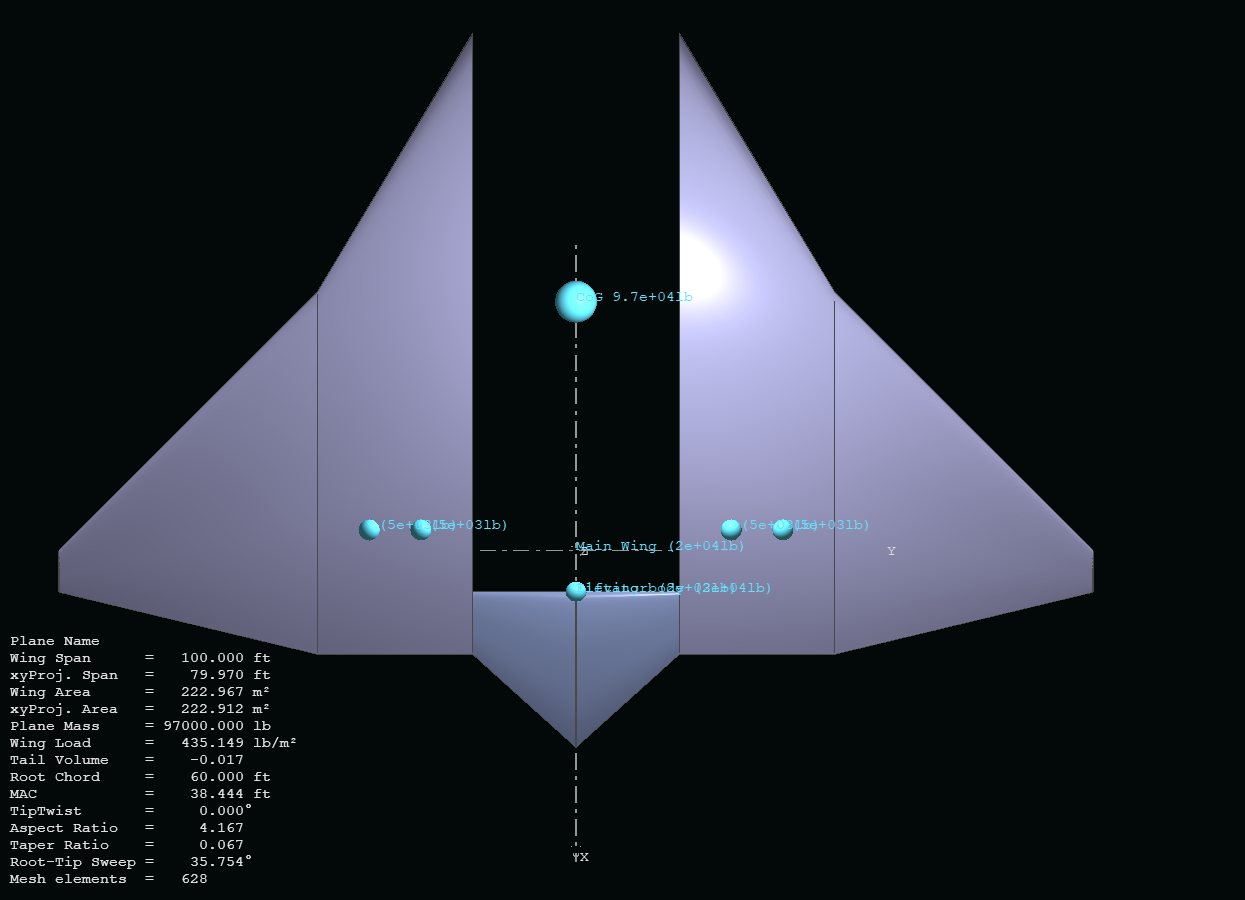
The top-down planform view shows the double-delta wing sweep in full, illustrating how the cranked leading edge blends continuously into the fuselage without a discrete wing-root junction.
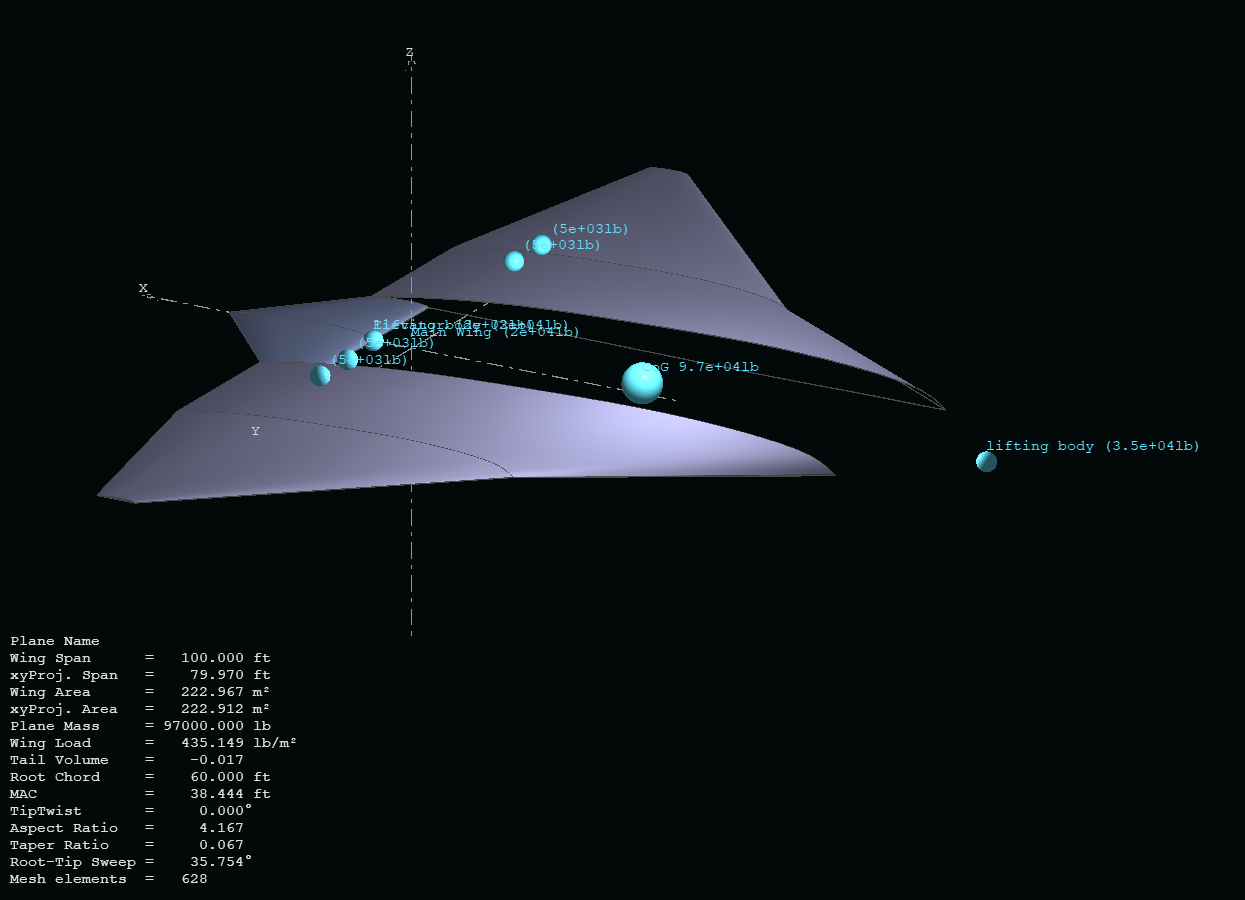
The three-quarter view shows the blended wing lifting body as a single continuous surface, carrying the vehicle across its full flight envelope from subsonic approach to hypersonic reentry.
Built for Reentry, Not Just Launch
Every structural choice on Project Helga is made against the hardest part of the flight envelope, not the easiest — hypersonic reentry heating, not runway takeoff. The airframe is engineered as a single reusable structure rated for repeated cycles, not a one-shot heat shield bonded to an otherwise disposable frame.
Fuselage and wing form one continuous aerodynamic surface with no discrete junction, eliminating the parasitic drag and localised heating spikes that occur at a conventional wing root fillet.
A cranked leading edge delays flow separation at high angles of attack, preserving roll and pitch control authority from hypersonic reentry all the way down to final approach speeds.
Ionic liquid drawn from the propulsion system's main tank circulates through the airframe's leading edges and lower surface during reentry, actively redistributing heat load rather than relying on ablative shielding alone.
Slight dihedral and a canted trailing edge sweep provide passive roll stability and a stable high-AOA reentry attitude without active control surface deflection, reducing actuator heating and workload during the hottest flight phase.