Starlifter II — Single Stage
to Orbit
Project Helga is a powered-flight SSTO heavy lift shuttle engineered for runway takeoff and landing across the full speed envelope — from subsonic traffic pattern to hypersonic orbital insertion. The hypersonic double-delta blended wing lifting body airframe is optimised for stable, efficient flight at every regime it will encounter in service.
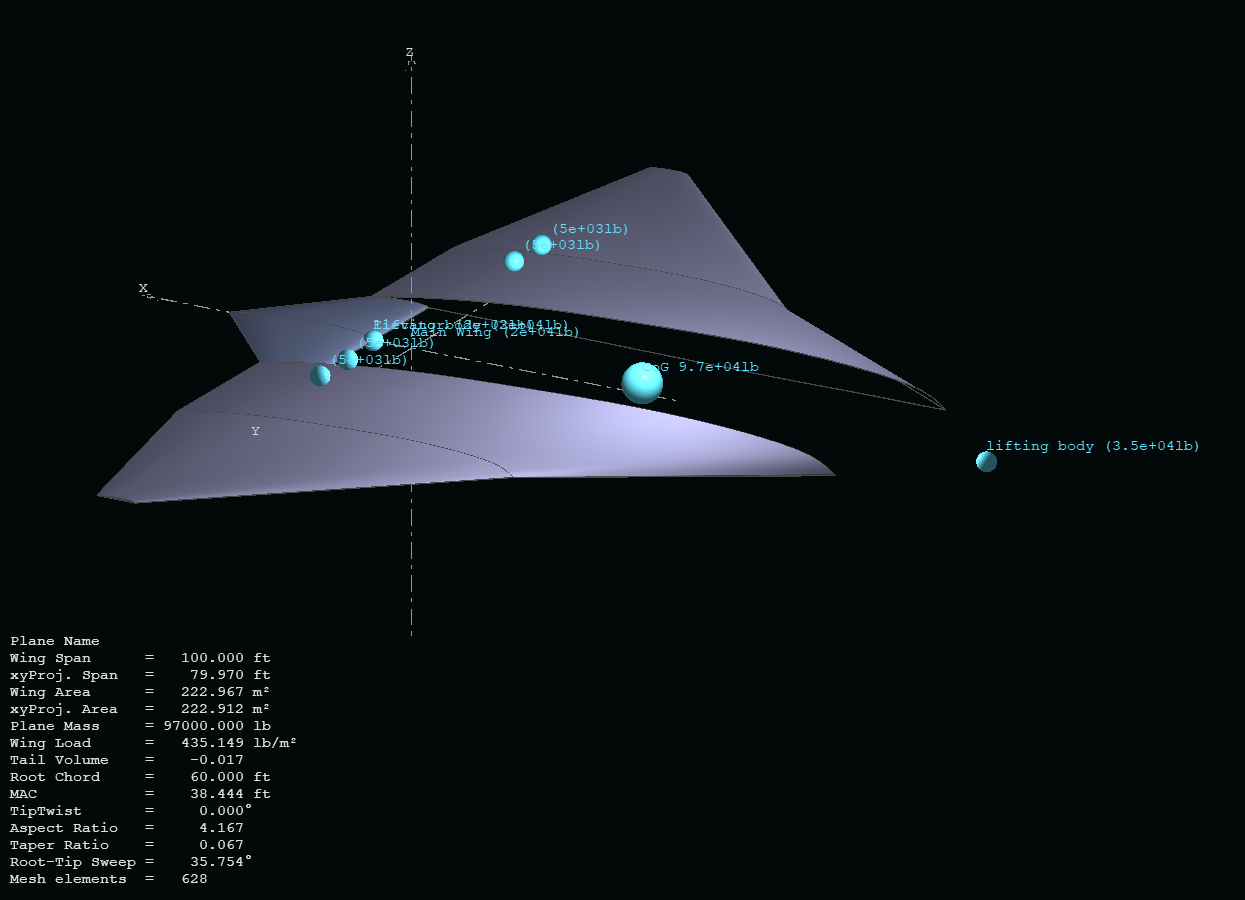
The blended wing lifting body configuration integrates the fuselage and wing into a single continuous aerodynamic surface. This eliminates parasitic drag at the fuselage-wing junction and maximises internal volume for payload, propellant, and ionic liquid thermal management systems.
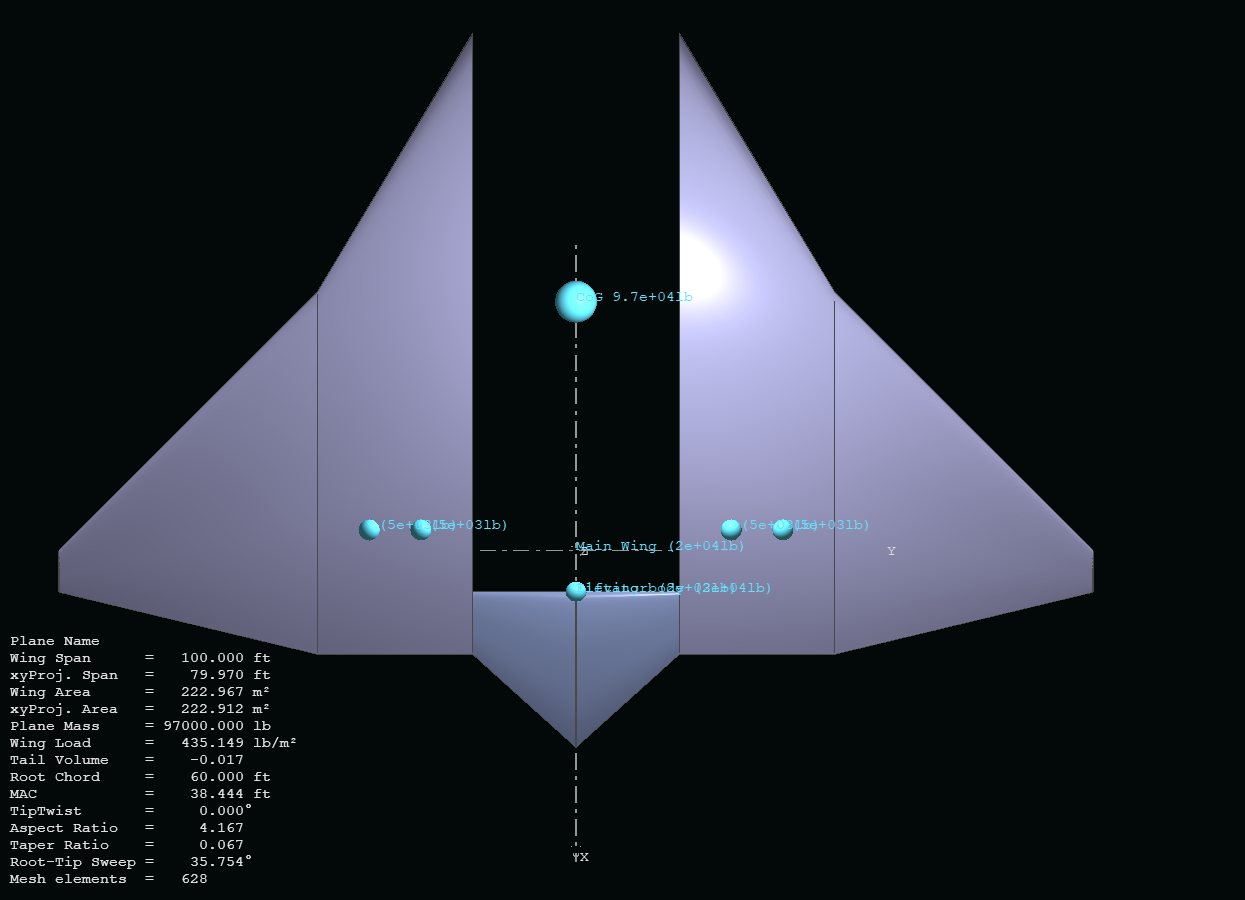
The double-delta planform provides high lift-to-drag ratios across the full speed envelope from subsonic approach to hypersonic cruise. The cranked leading edge delays flow separation at high angles of attack, preserving control authority during reentry and low-speed landing approach.
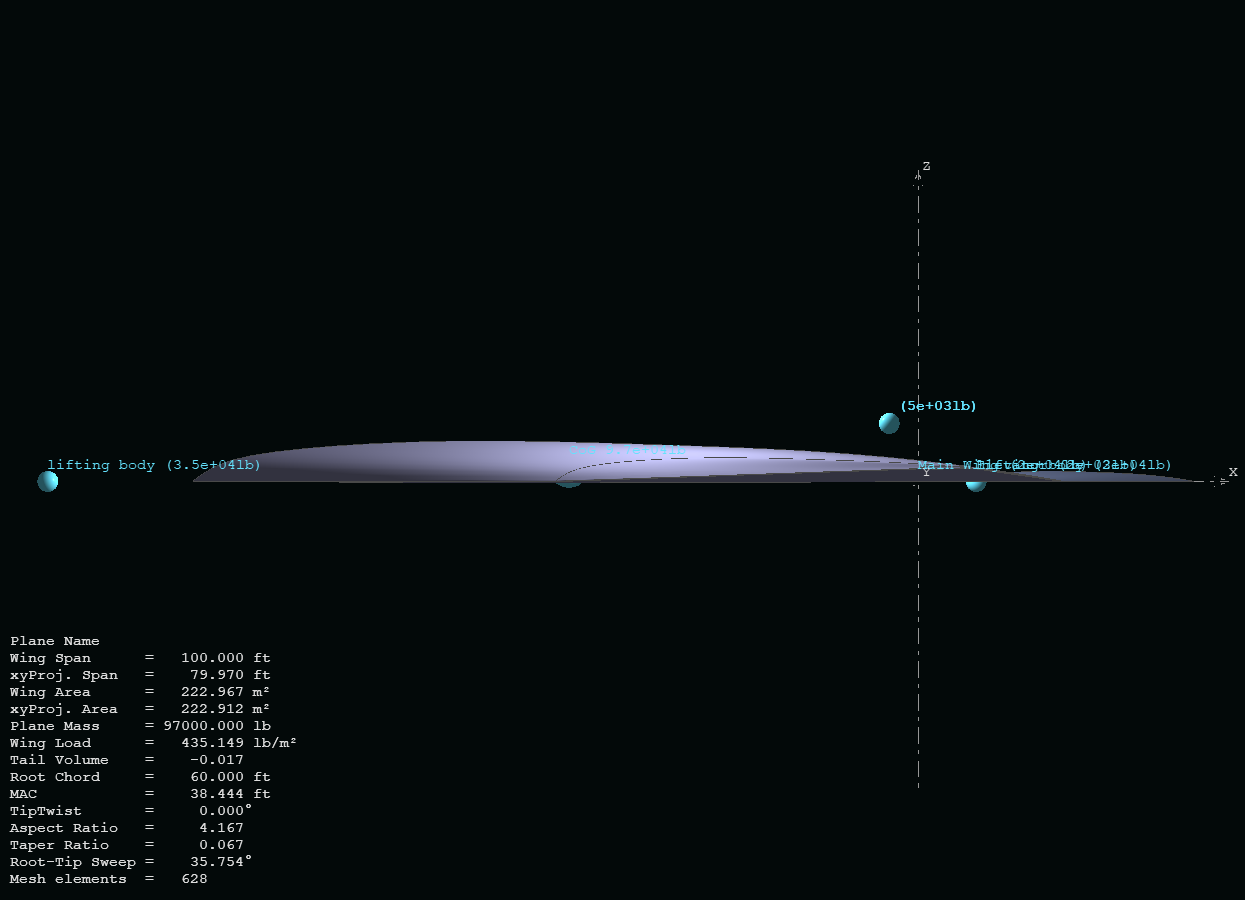
The shallow camber line and slight dihedral are visible in profile. Dihedral provides passive roll stability without requiring active control surface deflection, reducing actuator workload during hypersonic cruise where control surface heating is a primary design constraint.
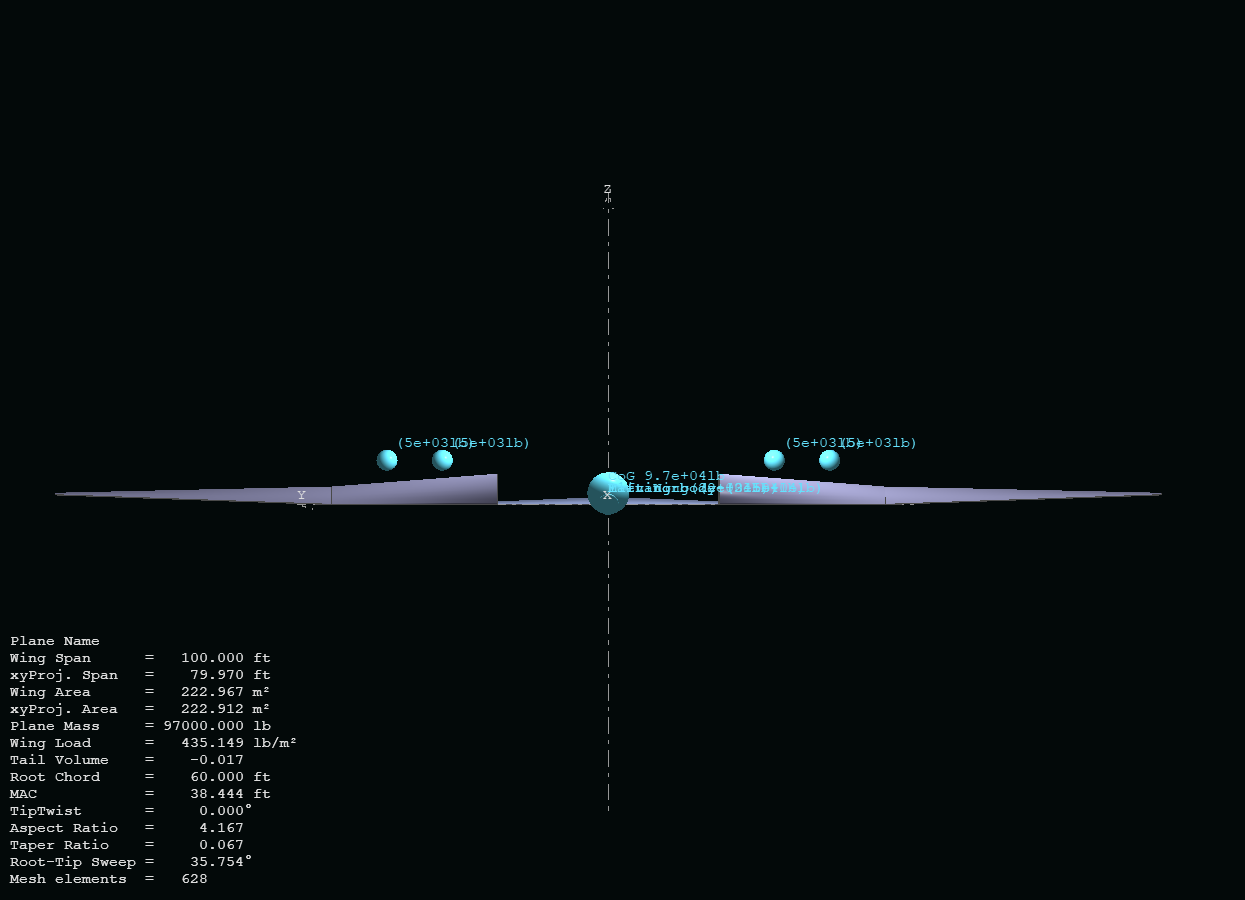
The canted trailing edge sweep creates a stable high angle-of-attack reentry profile. During atmospheric entry the vehicle pitches to a controlled high-AOA attitude, using the broad lower surface as a heat shield while the ionic liquid thermal management system actively redistributes thermal loads away from critical structural elements.
Dual-Mode Hybrid Drive — Unlimited Atmospheric Range
The Starlifter II propulsion system is a fully integrated hybrid architecture combining inline ABEP ion thrusters, an MHD-Lorentz rail accelerator operating in dual boost/generation modes, ionic liquid afterburner stages, and deep-space solar wind capture — engineered as a single unified drive system rather than discrete propulsion modules.
Full Propulsion Architecture →